Umbilical cord blood was once regarded as medical waste. Today, it is recognised globally as a valuable source of blood-forming stem cells used in the treatment of certain serious diseases.
Umbilical cord blood is the blood remaining in the umbilical cord and placenta after the birth of a baby. It is a rich source of hematopoietic stem cells. These stem cells are responsible for producing red blood cells, white blood cells and platelets. Cord blood stem cells are used in transplant treatments for over 80 conditions, including:
Leukemias, lymphomas, and multiple myeloma.
Wiskott-Aldrich syndrome, SCID, and other genetic immunodeficiencies.
Aplastic anemia and severe cytopenias.
Krabbe disease, Hurler syndrome, and thalassemias.

In a cord blood transplant, the infused stem cells travel through the patient’s bloodstream where they heal and repair damaged tissues and rebuild a new healthy immune system.The therapeutic potential of cord blood stem cells is now widely recognised, making it a compelling option for parents who want an added layer of security for their family’s health.
Cord blood stem cells has been used to treat more than 30,000 patients suffering from diseases such as leukaemia, other cancers, blood disorders and in other clinical trials.
Cannot find a matching donor within their family
have been performed worldwide from the start until 2021
Cord blood stem cells generally require less stringent HLA matching compared to bone-marrow or peripheral-blood stem-cell transplants. However, compatibility remains an important part of transplant assessment. When evaluating a unit for use by another person, the transplant specialist assesses HLA compatibility, cell dose, patient size, the disease being treated and the quality of the stored unit.
Saving your baby’s cord blood works like a biological insurance for your family’s future. Unlike traditional bone marrow transplants, cord blood stem cells do not need a perfect match to work, making them much easier to use in treatments. About 70% of people who need a stem cell transplant cannot find a matching donor within their family. Banking your baby’s cord blood creates an immediate, accessible match for your child and a high-probability option for siblings and relatives.
Collecting cord blood is quick, simple, and handled directly by your delivering doctor or midwife. The process takes place only after your baby is safely delivered and the cord is cut. It is painless and poses zero risk to both you and your newborn.
Since the first successful umbilical cord blood transplant in 1988, it has been estimated that more than 30,000 transplants have been performed in children and adults for the correction of inborn errors of metabolism, hematopoietic malignancies, and genetic disorders of the blood and immune system.
Storing your baby’s umbilical cord blood is a once in a lifetime opportunity after your baby is delivered. Your baby’s umbilical cord blood is rich in stem cells which possess the remarkable ability to renew and rebuild blood, tissues, organs, and the immune system. Banking them at birth secures a lifelong medical safety net for your family.
Graft vs. Host Disease is a severe complication where the transplanted donor cells attack the patient’s own tissue. Using the baby’s own stem cells eliminates this to a large extent.This disease will usually occur in transplants when the donor and recipient are different.
Following laboratory processing, the storage protocol follows three critical phases:
Step 1
Once the baby is born and the umbilical cord is clamped and cut, the remaining blood is drawn from the cord into a collection bag.
In addition to cord blood, samples of the maternal blood are drawn after the delivery process. The maternal blood will be tested for a list of infectious diseases, including HIV, Hepatitis B and C, Cytomegalovirus, and Syphilis. These tests are the standard requirement under international cord blood cryopreservation protocol so as to ensure the safety and quality of the collected cord blood unit.
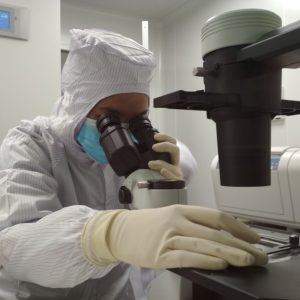
The collected blood is safely transported to our laboratory, where it is processed (primarily to remove red blood cells) and isolate the valuable stem cell fraction.
After laboratory processing, the stem cell fraction will be placed into FDA-approved freezing bags clearly labeled with the birth mother’s name, date of birth, processing date, contents, and unique ID code.
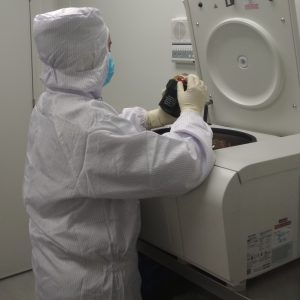
Raw cord blood consists of three main types of cells: a top layer of plasma, a bottom layer of dense red blood cells, and a middle layer called the “buffy coat.” The buffy coat contains the vital white blood cells and blood-forming stem cells. Processing is the essential step that separates and concentrates these valuable stem cells from the rest of the blood.
The processing method is hence the key in determining the quality, total cell yield and post-thaw viability of the stored unit. At The Longevity Stem Cell Bank, our advanced processing technology and technical expertise assures maximum cell recovery and high cell viability, guaranteeing your baby’s stem cells remain potent and ready for clinical use when needed.

Controlled Rate Freezing: The freezing bag undergoes automated, computer-controlled cooling until it reaches a cryogenic storage temperature of -150°C.
Long-Term Cryopreservation: The frozen UCB unit is safely transferred to liquid nitrogen tanks located inside our secured, 24/7 monitored storage facility.

Reach us for banking enquiries, sample retrieval, or inherited custody transfers.
Cord blood is the blood remaining in the umbilical cord and placenta after delivery. It is a rich source of blood-forming stem cells used to treat over 80 serious blood, immune and metabolic disorders.
Cord blood banking preserves a potential treatment option as it can only be collected once-in-a-lifetime immediately after birth. You may check with our team on viable payment options or refer to the Pricing Page
After your baby is born and the cord is clamped and cut, the doctor or midwife collects the remaining blood into a sterile collection bag. No blood is taken directly from the baby.
Delayed cord clamping may reduce the amount available for collection. The safety of mother and baby, together with your obstetrician’s decision, always comes first.
No. Collection is safe and painless for both the baby and mother as it takes place after the cord has been cut. The medical team will always prioritise the health and safety of you and your baby.
Depending on medical suitability, the stored cord blood unit may be considered for the child, a biological sibling, a parent or a close relative. The transplant specialist will assess the usability based on the HLA compatibility, cell quantity and the condition being treated.
Each full biological sibling has a 25% chance of being a perfect HLA match. Because cord blood requires less stringent matching than bone marrow, partial matches may also be clinically viable.
We provide an itemised quotation covering enrolment, collection kit, courier transportation, laboratory processing, infectious disease testing, long-term storage, retrieval, transfer, cancellation and applicable taxes. You may check with our team on viable payment options or refer to the Pricing Page
In addition to cord blood, samples of the maternal blood are drawn after the delivery process. The maternal blood will be tested for a list of infectious diseases, including HIV, Hepatitis B and C, Cytomegalovirus, and Syphilis. These tests are the standard requirement under international cord blood cryopreservation protocol so as to ensure the safety and quality of the collected cord blood unit.
Processing is the essential step that separates and concentrates valuable stem cells from the rest of the blood. The processing method is hence the key in determining the quality, total cell yield and post-thaw viability of the stored unit. At The Longevity Stem Cell Bank, our advanced processing technology and technical expertise assures maximum cell recovery and high cell viability, guaranteeing your baby’s stem cells remain potent and ready for clinical use when needed.
Technically, under the proper conditions stem cells can be stored almost indefinitely. At The Longevity Stem Cell Bank, we are here for the long term to ensure that your future health is secured.
At this point, your child will be a legal adult with full ownership of their stored cells. They may choose to renew or proceed with the termination of the storage contract. We recommend continued storage as the cells can be stored indefinitely and there is huge potential for advanced personalised therapies to be derived from the stored cord blood.
Yes, we highly recommend it. Each child’s cord blood is genetically unique, and siblings often have a higher chance of compatibility with one another than with unrelated donors. Storing for every child gives your family broader coverage and more options for future therapies.
WhatsApp us