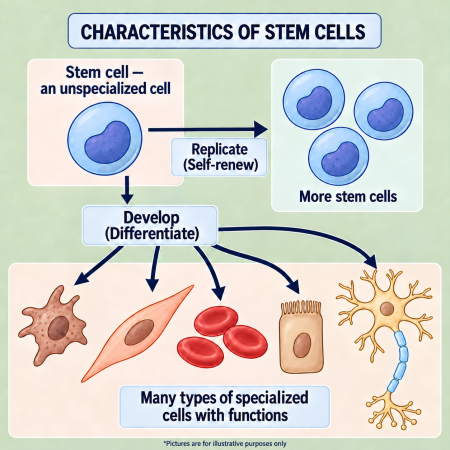
Stem cells can replicate themselves and develop into specialized cell types, though their potential varies. For example, blood-forming stem cells mainly develop into blood cells, while neural stem cells produce nerve tissue. Pluripotent stem cells have broader potential, capable of developing into nearly any tissue type in the human body. Induced pluripotent stem cells (iPSCs) are created by reprogramming adult cells, such as blood or skin cells, into this pluripotent state.
How is IPSC different?
Reprogrammed From Adult Cells Without Using Embryo
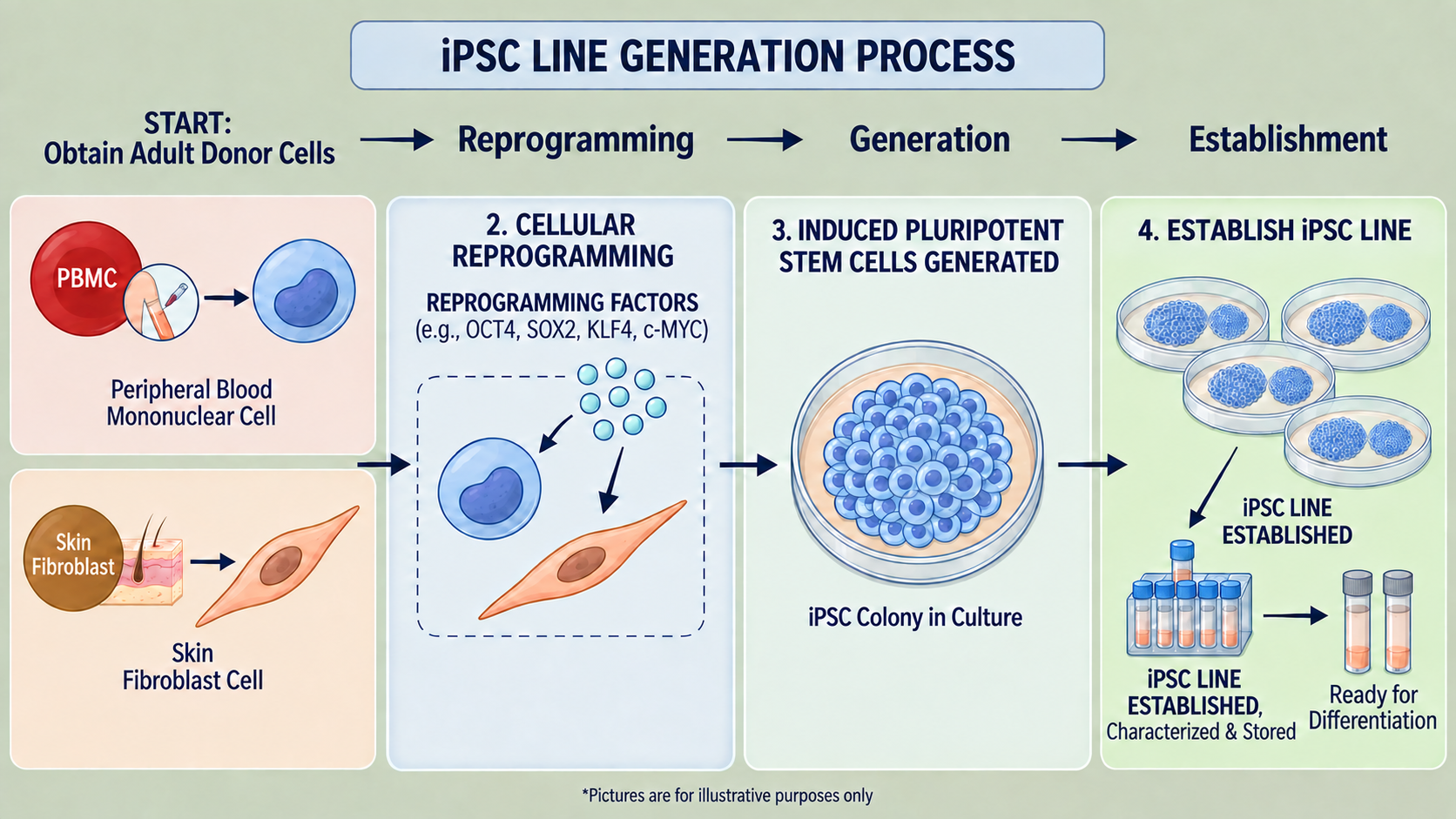
Unlike embryonic stem cells, which are derived from early-stage embryos and raise ethical considerations, or donor-derived cells, which carry compatibility risks, iPSCs are produced in a laboratory by reprogramming an individual’s own adult cells, such as blood or skin cells, without using an embryo. Once established, an iPSC line can be expanded and studied as a renewable cell source. Being genetically related to the patient doesn’t guarantee every iPSC-derived product is safe or immune-compatible. Any inherited genetic condition will be carried into the iPSCs, so additional assessment or genetic correction may be needed before therapeutic use.
How are iPSCs generated?
Pluripotent Cell Generation and Banking Process
Adult cells can be collected from sources such as blood or skin. Selected cells are then exposed to specific reprogramming factors under controlled laboratory conditions. These factors return the cells to a pluripotent state. Successfully reprogrammed cells are expanded to establish an iPSC line. The iPSC line can then be cryopreserved for future research or regulated therapies.
Step 1
Consultation and Consent
The intended service details, source-cell collection process, permitted uses, storage period and consent requirements are reviewed with the customer.
Step 2
Source Cell Collection
Adult cells are collected from an agreed source, such as a peripheral blood sample or skin cells.
Step 3
Cell Reprogramming
The selected adult cells are reprogrammed in the laboratory to generate candidate iPSC colonies.
Step 4
Expansion and Quality Assessment
Candidate colonies are expanded and assessed to confirm their identity, pluripotent characteristics, sterility and genetic quality.
Step 5
Cryopreservation
Qualified iPSC lines are frozen under controlled conditions, assigned a unique identifier and transferred into monitored cryogenic storage.
Step 6
Storage confirmation
The customer receives documentation identifying what was generated, tested and placed into storage.
Why consider IPSC banking?
A Renewable Personalised Cell Platform
iPSCs can develop into many specialised cell types, researchers are studying their potential to generate cells associated with the heart, nervous system, blood, immune system and other tissues.
Generated from your own cells
iPSCs can be created from adult cells collected from an individual.
Self-renewing in the laboratory
Once an iPSC line is established, the cells may be expanded to create additional research or therapeutic material.
Broad developmental potential
Under controlled conditions, iPSCs may be directed to develop into different specialised cell types.
Relevant to personalised research and therapy
Patient-specific iPSCs may be used in areas such as disease modelling, drug research and the development of future personalised cell technologies.
Potential applications
Future Possibilities in Cell Replacement
Undifferentiated iPSCs are not injected directly as a general treatment. Cells intended for clinical use must be differentiated, purified, characterised and tested before administration. Important risks include genetic abnormalities, contamination, unintended cell development and tumour formation. These risks must be addressed through regulated research and manufacturing.
Disease modelling
Patient-derived iPSCs may be developed into relevant cell types so researchers can study how a disease develops.
Drug discovery and testing
Researchers may use iPSC-derived cells to investigate how cells respond to potential medicines.
Personalised research
Because iPSCs can be generated from an individual’s cells, they may help researchers study differences between patients.
Regenerative medicine research
Scientists are exploring whether iPSC-derived cells could eventually replace or repair damaged cells and tissues.
Immune-cell development
iPSCs are also being investigated as a renewable starting material for producing immune cells such as natural killer cells and specialised T cells.
Frequently Asked questions
You might want to ask
Reach us for banking enquiries, sample retrieval, or inherited custody transfers.
What are iPSCs?
iPSCs are adult cells that have been reprogrammed in a laboratory into a pluripotent state. They can self-renew and may be directed to develop into many specialised cell types.
Are iPSCs collected directly from my body?
No. Adult cells, such as blood or skin cells, are collected first. These cells are then reprogrammed in a laboratory to generate iPSCs.
Is iPSC banking a medical treatment?
No. iPSC banking is a cell-generation and storage service. Any future treatment derived from those cells would require separate manufacturing, medical assessment and regulatory approval.
Does banking guarantee successful iPSC generation?
No. Reprogramming may be unsuccessful, or a generated line may not meet the required quality criteria. For further information about our cell banking guarantees, feel free to reach out to us.