A Once-in-a lifetime opportunity to save powerful cells
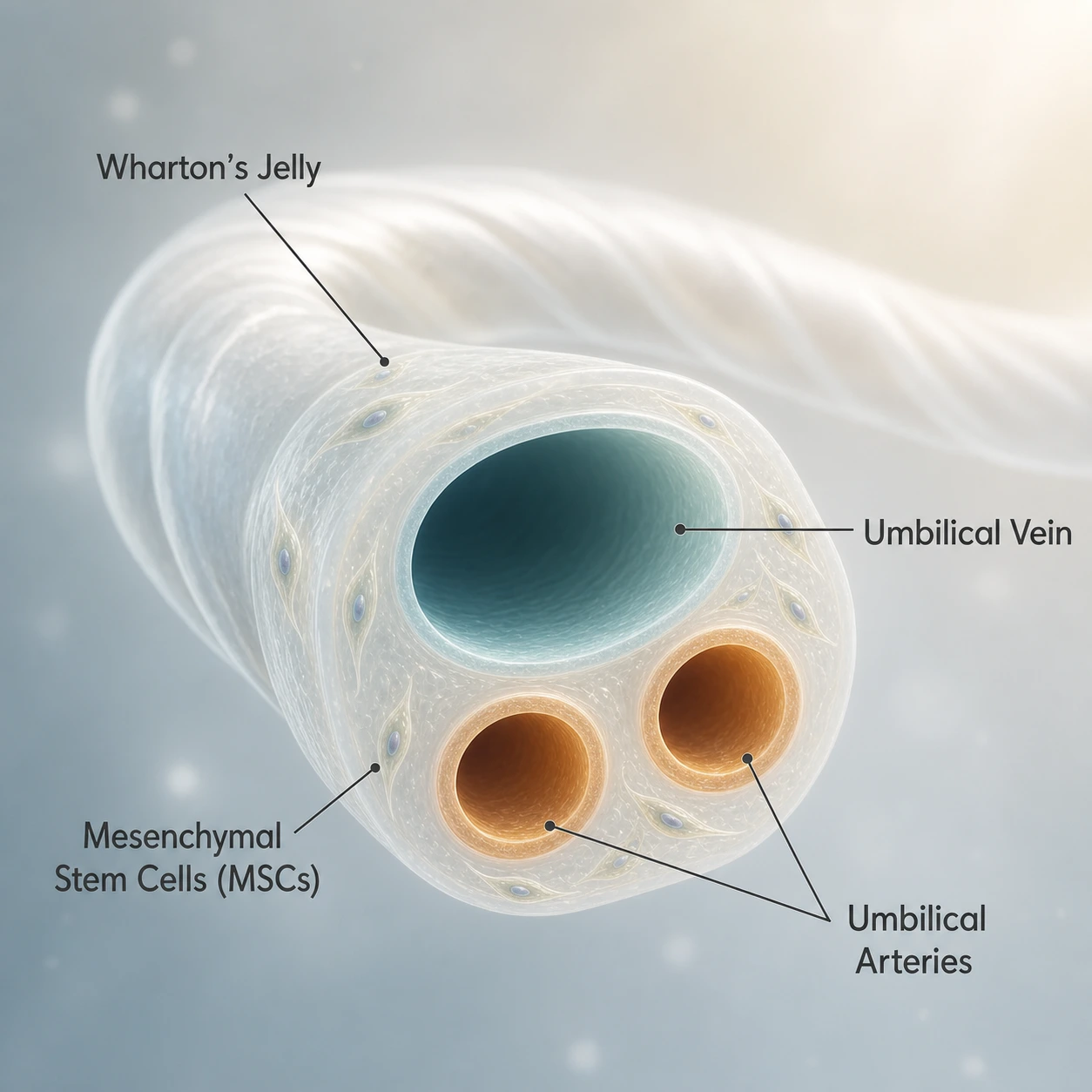
After birth, the umbilical cord is normally discarded. Inside the umbilical cord contains two arteries and one vein, which is surrounded by a soft connective tissue called Wharton’s jelly. This Wharton’s jelly is the most abundant source of young, highly potent MSCs. Because the collection occurs immediately after birth once the cord is clamped and cut, there is zero risk or discomfort to the mother or the baby.
The cord is only accessible at delivery, making birth a once-in-a-lifetime opportunity to preserve these unique cells.
Our MSC banking preserves this biological resource at the only time it can be collected. These MSCs can then be accessed for future research and regulated cellular therapies.
Regenerative Potential
Under controlled laboratory conditions, MSCs can multiply and develop into specialized connective-tissue cells associated with bone, cartilage and fat.
Cellular communication
Researchers also study the way MSCs interact with surrounding cells and help reduce inflammation, modulate immune responses and support tissue-repair.
Cord Bood vs cord tissues
Two materials, Two Distinct Roles
While both cord blood and cord tissue are both collected from the umbilical cord at birth, they contain different cell types that serve different medical needs.
Blood-Forming: Rebuilds blood and immune system components
Tissue-Forming: Supports connective tissue, bone, and cartilage growth
Primary Medical Focus
Established clinical treatments such as for blood disorders, leukemia, and immune deficiencies
Proven clinical applications and active research in regenerative medicine, anti-inflammation and tissue repair.
Potential Treatment
Support Healthy Aging in Many Ways
Aging is a natural process accompanied by changes such as increased inflammation, cellular stress and a gradual decline in the body’s ability to repair and regenerate tissues.
MSCs can interact with the immune system and may help regulate excessive inflammatory responses associated with aging, potentially supporting a more balanced tissue environment
Cellular Health
MSC-derived factors may influence cell-survival pathways and help cells respond to stress, supporting normal cellular function.
Tissue Repair
MSCs can release signals that support blood-vessel formation, cell survival and tissue repair, while potentially stimulating the body’s own regenerative cells.
Healthier Tissue Environment
Cellular senescence is an important feature of aging. Research is investigating how MSCs and their secreted factors, including extracellular vesicles, may influence senescence-related signaling and the surrounding inflammatory environment.
clinical research
Medical Conditions Under Investigation
Because MSCs can influence inflammation, tissue repair and cellular communication, researchers are investigating their potential across a wide range of medical conditions. The level of evidence varies considerably between diseases. Some applications have progressed to, or even completed, human clinical trials, while others remain in the laboratory or early clinical research phase.
Reach us for banking enquiries, sample retrieval, or inherited custody transfers.
Can the stem cells harvested from my baby’s cord tissues be used to treat other family members?
Yes. Mesenchymal stem cells (MSCs) derived from cord tissue carry minimal risk of rejection, even when used in people other than the donor child, due to their naturally low immunogenicity. This makes them suitable for use across parents, siblings, and other eligible family members, expanding the value of collection and storage.
Do MSCs need to be genetically matched before they can be used for treatment?
Not necessarily. Unlike cord blood stem cells, which usually require close genetic (HLA) matching for safe use, MSCs are considered immune-privileged and generally do not require an exact match. This gives your family greater flexibility in how the stored cells may be used in the future.
Do I need a separate operation for collection of cord tissues?
No. Cord tissue is collected from the umbilical cord immediately after delivery, at the same time as cord blood collection. No additional procedure is needed for you or your baby.